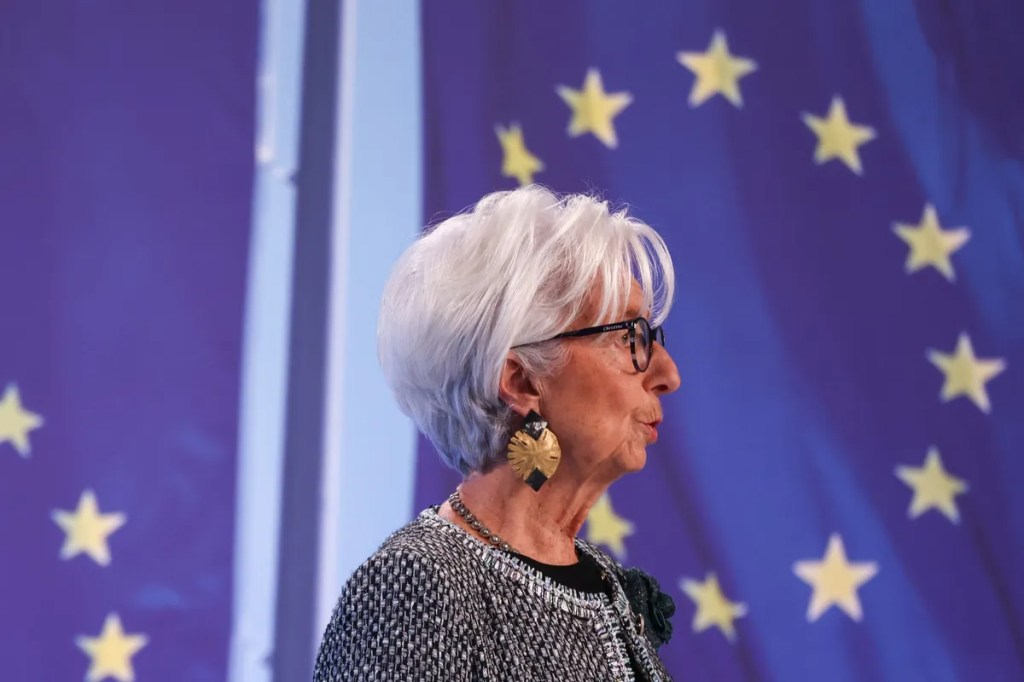
The European Central Bank has now cut its deposit rate four times since June 2024, bringing it to 2.25%.
The relief for borrowers and highly leveraged businesses is real, but there is a growing risk that rate cuts become a substitute for the structural reforms that Europe actually needs.
Mario Draghi’s landmark report last autumn was admirably blunt: Europe faces a competitiveness crisis driven by energy costs, regulatory fragmentation, underinvestment in defence and technology, and demographic decline.
Unfortunately, none of those problems is amenable to monetary policy. They require political courage of the kind that is in short supply across Berlin, Paris, Rome and Brussels.
The French have got themselves into a fiscal death spiral which they are determined to ignore until it inevitably blows up and returns their living standards to somewhere below Greece’s in 2013.
Running a deficit approaching 6% of GDP with no credible consolidation plan is not the way to get ahead in 2025.
Italy’s debt-to-GDP ratio sits above 135% with growth persistently below 1%. Germany is only now beginning to emerge from two years of effective stagnation.
Though it’s difficult to find nice words to say about Christine Lagarde, she has done what she can within the ECB’s mandate.
The heavy lifting must now come from finance ministries. Supply-side reform is horribly out of fashion in the EU (and pretty much everywhere in the West, too). Still, governments must be willing to liberalise labour markets, cut regulatory red tape, and stop treating energy as a political plaything. The continent will continue to fall further into its pathetic torpor without bold action.